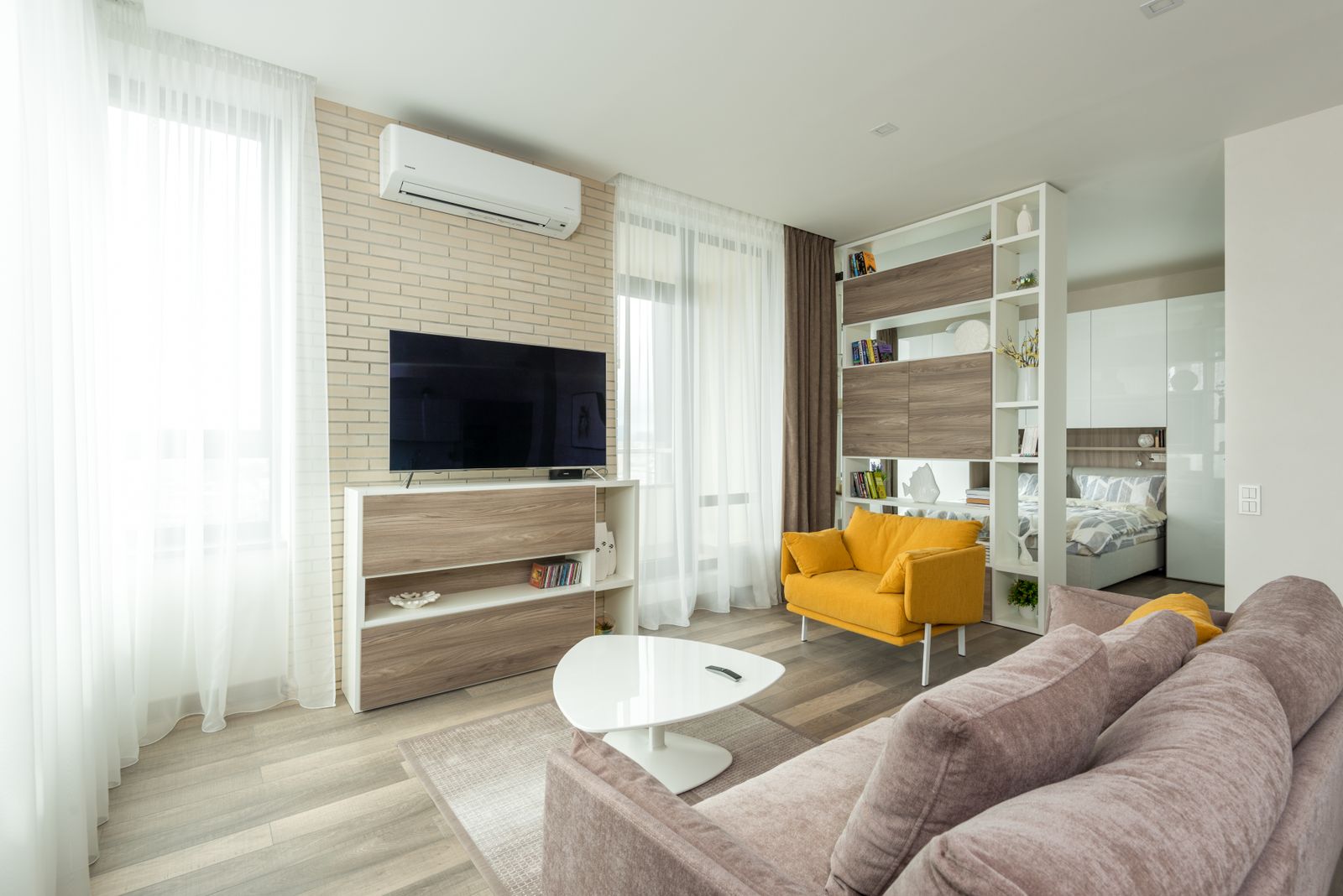
Most decorating advice quietly assumes you have room to spare. Most of us don't. If you live in a one-bedroom flat or a studio — like a huge share of people in every city — the real challenge isn't picking a colour, it's making a small space work hard without feeling cramped.
The good news: 2026's biggest furniture shift is aimed squarely at exactly this. Here's the playbook.
Buy furniture that does two jobs
This is the single most important idea for a small home, and it's finally being done well. For years "multifunctional furniture" meant a clunky sofa bed that was bad at being both. Not anymore — the mechanisms have quietly got much better, and a piece that does two jobs no longer looks like a compromise.
The ones actually worth it:
- A proper sofa bed — not for daily sleeping, but so a studio can host a guest without a whole second room.
- A lift-top or nesting coffee table — rises to laptop or dining height, tucks away after.
- Storage ottomans and benches — seating that swallows bedding, off-season clothes, or the clutter that has nowhere else to go.
- An extendable dining table — compact for two on a normal day, seats six when people come over.
In a small home, every piece should earn its footprint twice — once for how it looks, once for what it hides.
Make the storage disappear
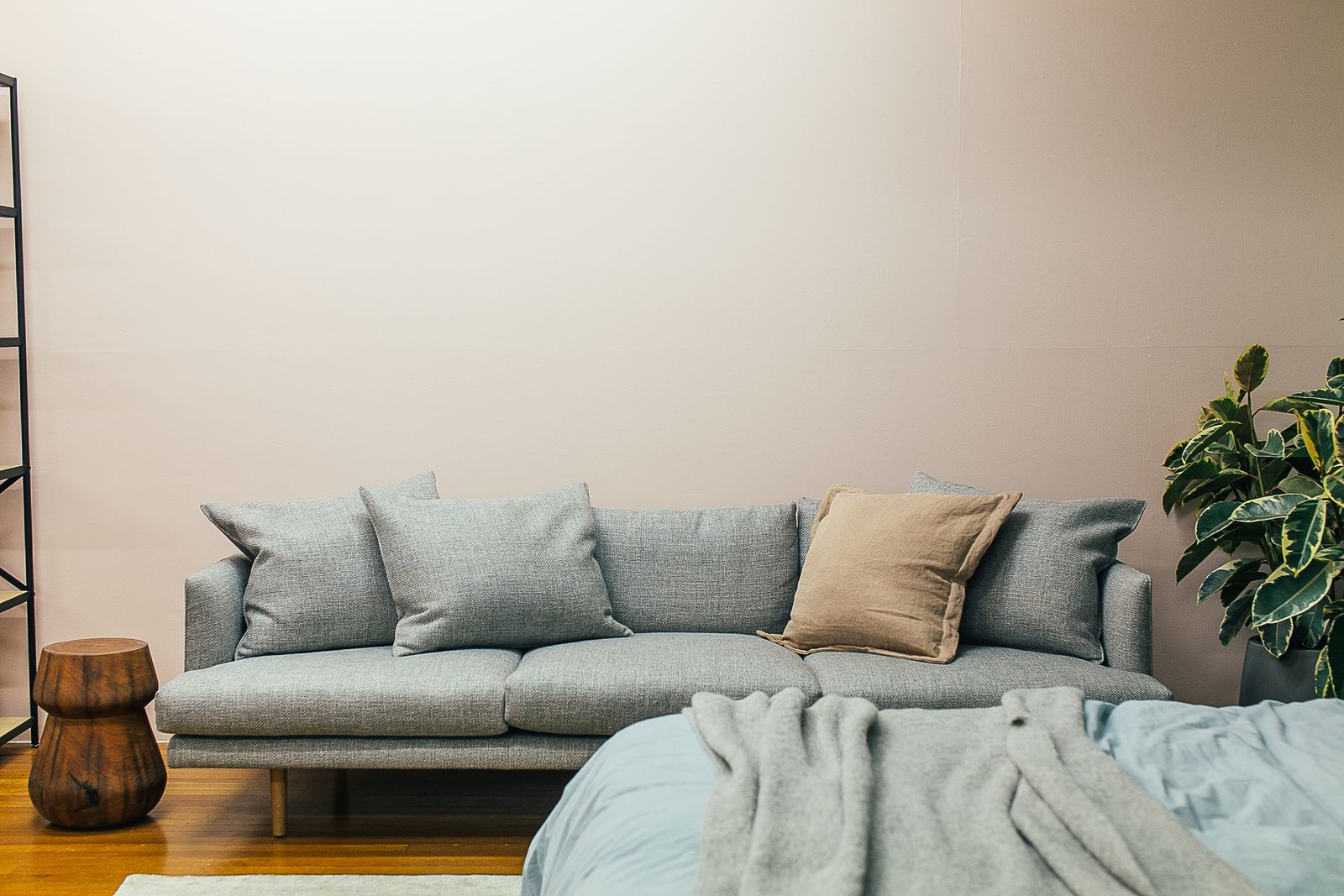
The 2026 word for it is "subtle storage" — the opposite of a wall of visible shelving screaming look how much stuff I own. In a small space, visible clutter is what actually makes it feel small, not the square meterage.
The moves: full-height cabinetry painted the same colour as the wall so it recedes; bed frames with drawers underneath; a slim console that hides the hallway chaos; floating shelves kept deliberately sparse. The goal is for the storage to do its job without announcing itself.
Use height, because you can't use floor
When you're out of floor, the only direction left is up. Take shelving and cabinetry closer to the ceiling than feels normal — it draws the eye upward and makes the wall (and the room) read as taller. A tall, narrow bookcase almost always works better in a small room than a low, wide one that eats precious floor.
Zone an open space without walls
Studios live or die on zoning — making one room quietly feel like several. You don't need walls. A rug defines the living area. A bookshelf turned side-on becomes a half-height divider between "bedroom" and "everything else." A change in lighting signals a change in function. The trick is suggesting the boundary, not building it.
Let the light and the mirrors do the work
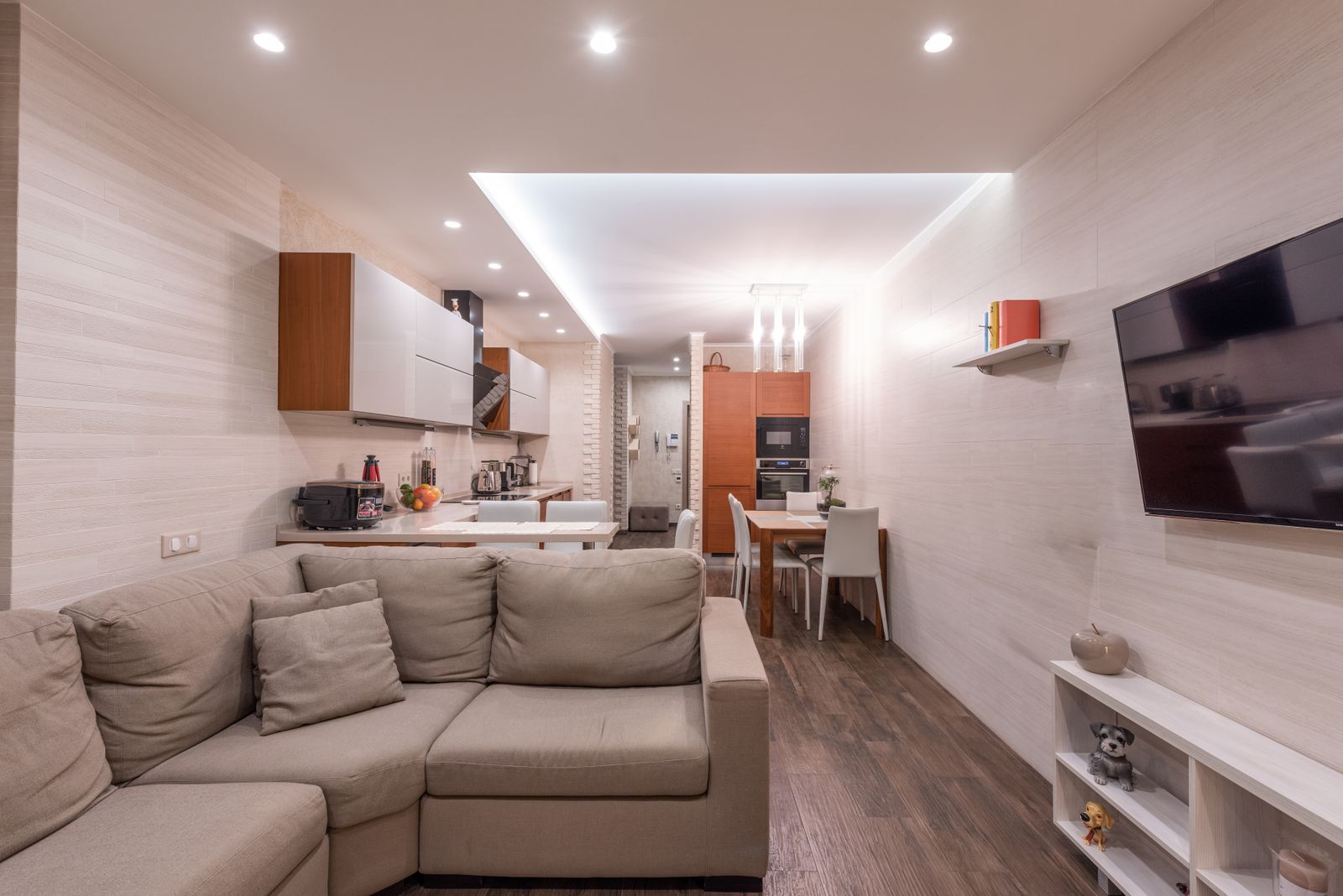
Two cheap moves punch well above their weight in a small space. Keep window areas as clear as you can — a sofa blocking half a window is stealing your best asset. And a large mirror placed to catch the daylight genuinely doubles the sense of space and brightness. Neither costs much; both make a real difference.
The mistake that quietly kills small rooms
Furniture that's the wrong size — almost always too big. In a small room the margins are unforgiving: a sofa 20 cm too deep, a bed that leaves no walkway, a dining table you have to squeeze past. It's the single most common reason a small space feels cramped, and it's the easiest to avoid.
The problem is you can't tell from a product page. A sofa's dimensions are just numbers until you see them against your actual walls and doorways.
That's the whole reason we built RoomTourAI — place any piece into a photo of your real room at true scale, and see whether it fits and still leaves you room to walk, before you buy. In a small home it's the difference between a flat that feels calm and one that feels like an obstacle course. Here's our five-minute fit check to run before you order anything.
Photography via Pexels: Max Vakhtbovych, Rachel Claire.